
‘From the pages of prospect’ – No. 9
[Originally published] Issue 8, June 2002
- Virtual schools
- The radical restructuring of higher education
- A choice of transformations for the 21st-Century university
- Foresight Snippets, No. 23
[Originally published] Issue 8, June 2002
[Originally published] Issue 7, March 2002
[Originally published] Issue 6, December 2001
Special Issue – Preparing for the Swinburne Scenarios Project, 2002
[Originally published] Issue 5, September 2001
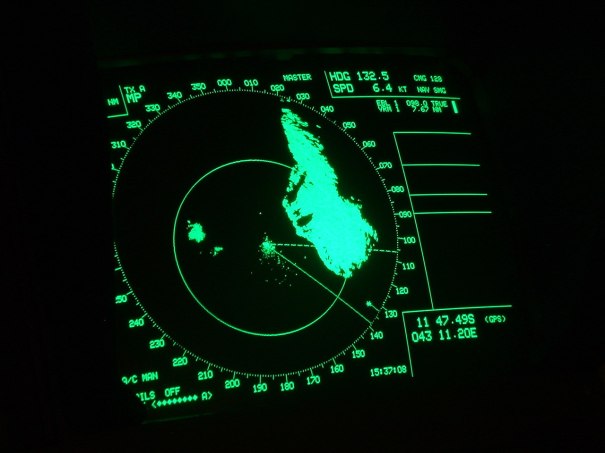 The final major piece of the scanning puzzle is the issue of timing: how often, or according to what sort of timetable, is the scanning in your organisation to be carried out? That question depends on how aware you want to be about what is going on in the external environment, and what your tolerance is for the risk of being blindsided out of existence by events or emerging issues in that environment. (TL;DR: serious preparation requires serious resourcing of the scanning system; no shortcuts or excuses will cut it. Reality cannot be fooled.)
[Originally published] Issue 4, June 2001
[Originally published] Issue 3, March 2001
[Originally published] Issue 2, Dec 2000
[Originally published] Issue 2, Dec 2000
[Originally published] Issue 2, Dec 2000
From this post onwards, we now dip into the items that were published in the Foresight Bulletin, prospect, starting with issue 2, the first issue that I edited. Most will not be given in their entirety, since they were often full-length articles taken from journals, magazines or other long-form sources. Rather, it will be sufficient to just give the ‘flavour’ of the piece in order to see how well they have ‘aged’. Initially, there were a handful of Snippets-ish type items, but these soon gave way to longer-form articles.
[Originally published in] prospect no 10, December 2002
Nikolas Badminton of the Exponential Minds Podcast and I had a chat a couple of months ago. That interview is now live.
We had a pretty fun conversation. It did meander just a teeny little bit, but it does manage to mention quite a few things as a result: something of the history of my use of the Futures Cone; the levels at which foresight can be implemented; Big History and how I’ve used it to frame the coming civilisational energy transition (i.e., away from fossil fuels); as well as mention of David Christian‘s new book which continues on from Origin Story (which I was reading in manuscript at the time). Of course, there are also some aliens mentioned in there, as is Hoag’s Object. There’s also a little bit on this blog’s current scanning retrospective and the concept of futures intelligence. So, all in all, regular readers won’t find too much that is unfamiliar in the interview, but it might be fun to hear it spoken of. Nikolas did a pretty good job of paring it all back from the very long chat we had! 😉
What I am smiting my forehead over, though, is that I forgot to mention Cal Newport’s 2019 book Digital Minimalism, during the segment where we were talking about using technology with careful intention. My bad! Also, Newport’s podcast, whose name I couldn’t quite remember, is Deep Questions, and it just keeps getting better and better as Cal hits his stride with it. It’s definitely re-ignited my interest in intentional approaches to productivity. Might end up doing a series of posts on that, one of these years…
Anyway, I do hope you enjoy listening to the interview as much I did recording it! Thanks Nikolas!
 As noted in an earlier post, I tend to distinguish between environmental scanning and horizon scanning, the former being relatively more proximal to the organisation/entity (in my usage), the latter being relatively more distal, although the terms are frequently used interchangeably in the literature. Expanding upon this distinction is useful because it allows for the creation of a more tractable ‘segmentation’ of the broader organisational environment into parts for which certain information sources are more clearly relevant and thereby more easily selected for inclusion into the overall scanning frame. In this way, a wide variety of disparate information sources can be combined into a unified framework for systematically reducing the risk that organisations – corporate, civic, governmental and military – could get caught out and ‘blindsided’ by a future they should have been able to detect coming.
[Originally published in] prospect no 9, September 2002
[Originally published in] prospect no. 8, June 2002
My “re-interview” over at FuturePod is now up.
My old foresight co-conspirator Peter ‘Captain Foresight’ Hayward and I catch up on what’s been happening since the first FuturePod interview more than two years ago (ep.18). Of course, I am now a post-academia ex-academic since becoming one of the “COVID redundancies” imposed upon the Australian university sector last year. It should come as no surprise that the current scanning retrospective and the concept of “futures intelligence analysis” feature pretty strongly in that chat.
It was a great deal of fun to do, and hopefully will be interesting both to FuturePod listeners, as well as readers of this blog who head over there. If you are one of the latter, do have a look around on FuturePod. Apart from Peter, they’re all former students of mine (and Peter’s), so it’s wonderful to see the ‘next generation’ of ‘foresight folks’ coming up…
There’s a science-fiction tie-in there, surely: “FuturePod, The Next Generation…”
https://www.futurepod.org/podcast/ep-109
[Originally published in] prospect no.7, March 2002
[Originally published] February 2002
[Originally published] January 2002
[Originally published] December 2001
 The Voroscope